
A rigid box costs two to four times what a folding carton of the same size costs, and the brands that pay for it are not doing so out of vanity. They are buying three specific properties that a folded carton cannot provide, and the decision is rational once those properties are separated from the aesthetics.
What rigid actually means
A rigid box, also called a set-up box, is built from greyboard – 1.5 to 3.0 mm of compressed waste paper – wrapped in printed paper. The board is never folded; it is cut and assembled, and the wrap is glued around it. A folding carton is die-cut from 300 to 400 gsm solid board and folded at the point of use. The two are not variations of each other; they are different constructions.
That difference produces the three properties buyers actually pay for.
Property one: a wall that does not bow
Greyboard holds a flat face under load and against time. A folding carton of the same footprint will bow slightly at the centre of a large panel, and the bow is visible in a photograph and feelable in the hand. For products displayed on a shelf or photographed for e-commerce, the flat face is the entire point.
Property two: print quality that survives the wrap
The wrap is printed as a flat sheet, usually 128 to 157 gsm coated art paper, before it is glued around the board. That means offset printing at full resolution, with foil, emboss and spot UV applied to a flat sheet rather than to a folded blank. Registration across a corner is a mitre problem, not a print problem, which is why fine detail survives the assembly.
Property three: the sound and resistance of a magnet
A magnetic closure changes how a box feels to open in a way that is hard to overstate and easy to measure in a showroom. Two magnets, usually 8 to 12 mm in diameter and buried between board and wrap, hold the lid shut with a small resistance and release with an audible click. The buyer reads that click as build quality, because a closure that snaps is a closure that was engineered.
The mechanics matter for specification: the magnet has to be positioned so that it closes before the lid seats, otherwise the wrap takes the load and the corner separates within a few hundred openings. Four magnets are used on larger formats to stop the lid flexing at the centre.
Rigid versus folding carton: the full comparison
| Rigid box | Folding carton | |
|---|---|---|
| Construction | Greyboard cut and wrapped | Solid board die-cut and folded |
| Tooling | Cutting dies plus assembly jigs | One cutting die |
| Material cost | Higher – board plus separate wrap | Lower – one printed sheet |
| Assembly | Hand or semi-automatic, labour-heavy | Machine-glued, shipped flat |
| Freight volume | Assembled, or collapsed if collapsible | Flat, typically 5 to 8 times denser |
| Typical MOQ | 500 to 1,000 | 1,000 and upwards, lower with digital |
| Lead time | 20 to 30 days | 12 to 20 days |
| Relative unit cost | 2 to 4 times the carton at the same size | Baseline |
The freight line is the one that surprises buyers. A 40-foot container holds roughly 8,000 to 12,000 assembled rigid boxes of a mid-size format, against 40,000 or more flat cartons. Collapsible rigid boxes recover most of that gap, at the cost of a slightly less rigid feel until the box is erected – which is why the collapsible construction dominates e-commerce luxury.
Specifying the board and the wrap
- Greyboard 1.5 mm for jewellery and small cosmetics; 2.0 mm for mid-size gift boxes; 2.5 to 3.0 mm for large formats and for boxes that must stand unsupported.
- Wrap at 128 gsm for sharp creases on small boxes, 157 gsm for larger panels where the paper has to span a corner without showing the board edge, 200 gsm only where the film has to hold a heavy emboss.
- Match the wrap grain direction to the fold, or the corner will show a hairline crack within a season.
- Specify the lid clearance explicitly: 0.5 to 1.0 mm total, split across both sides. Tighter and the lid binds in humid weather; looser and the box rattles.
Where rigid boxes fail in production
| Defect | Cause | Prevention |
|---|---|---|
| Wrap bubbling on a flat panel | Adhesive starved at the centre of a large sheet | Roller pressure and adhesive coat weight checked on the first 50 pieces |
| Visible mitre gap at a corner | Wrap cut short or board cut long | Corner jig with a hard stop; first-article inspection |
| Magnet off-centre, lid springs open | Magnet pocket routed before the wrap is registered | Route after printing registration is fixed; check with a steel rule |
| Lid binds after a week | Clearance set at the dry-season dimension | Allow for 0.3 mm of paper moisture expansion |
| Scuffing on a dark wrap | Gloss film on a matte-budget job | Matte lamination on black and navy as standard |
When a rigid box is the wrong answer
Three cases. If the pack ships as a parcel and the box is also the shipper, corrugated is cheaper and stronger. If the product sells below roughly fifteen euros, the box will exceed the margin it is meant to protect. And if the product is bought for utility rather than presented as a gift, the premium reading has nothing to attach to – a well-made folding carton with a good crease is the better specification.
What drives the unit price
Size first, because it sets board yield and wrap yield. Then board thickness, wrap paper, print method, finish, magnet count, and assembly – the last of which is why quantities below a thousand are expensive per unit regardless of design. A useful exercise is to price the same box at 500, 1,000 and 3,000 pieces: the curve tells you where the setup stops dominating.
Frequently asked questions
Are rigid boxes recyclable?
Yes, in the paper stream, if the components are separated. Greyboard, wrap paper and paperboard inserts are all repulpable; the magnets must be removed, and a PET window or a plastic ribbon has to be detached first. Designing the wrap seam so the board can be peeled helps, and a printed instruction on the base removes the guesswork.
Can a rigid box be shipped flat?
A collapsible rigid box can: the walls fold down and the box is erected by the customer or the packer in a few seconds. The trade-off is a slightly softer feel at the corners before erection, and a construction that cannot use the heaviest boards.
How many magnets should a magnetic box have?
Two on the front edge is standard up to about 250 mm wide. Above that, or on a deep lid, four – two front and two side – stop the lid flexing and give an even release across the width.
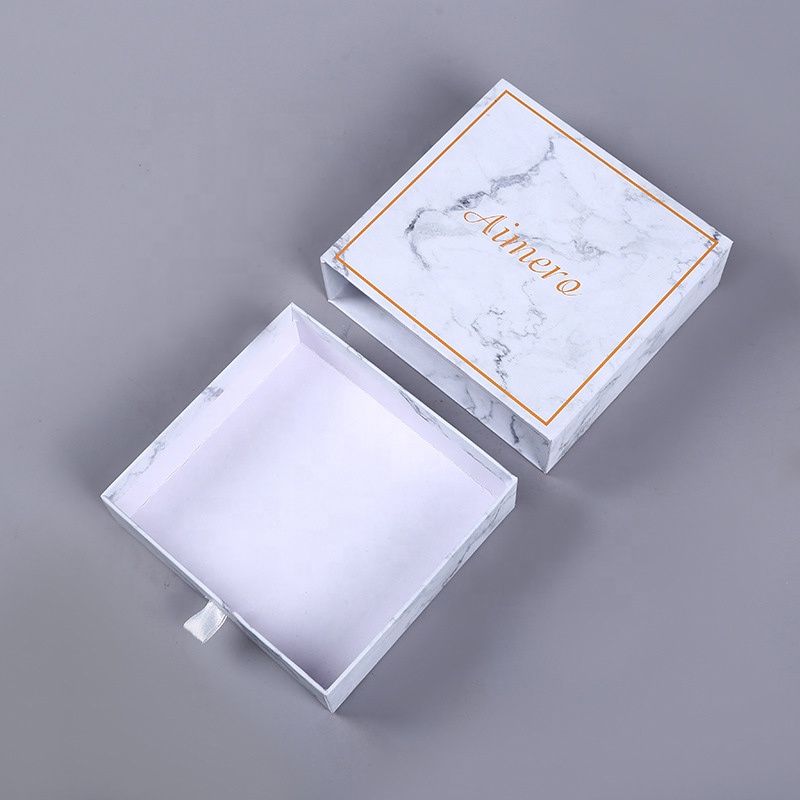
For the structural comparison between magnetic, collapsible and drawer formats, see the rigid box structures guide; for the specification side of customisation, the rigid box customisation guide covers sizing and finishing options.






Pingback: Rigid Box vs Folding Carton: How to Choose | PackSavvy