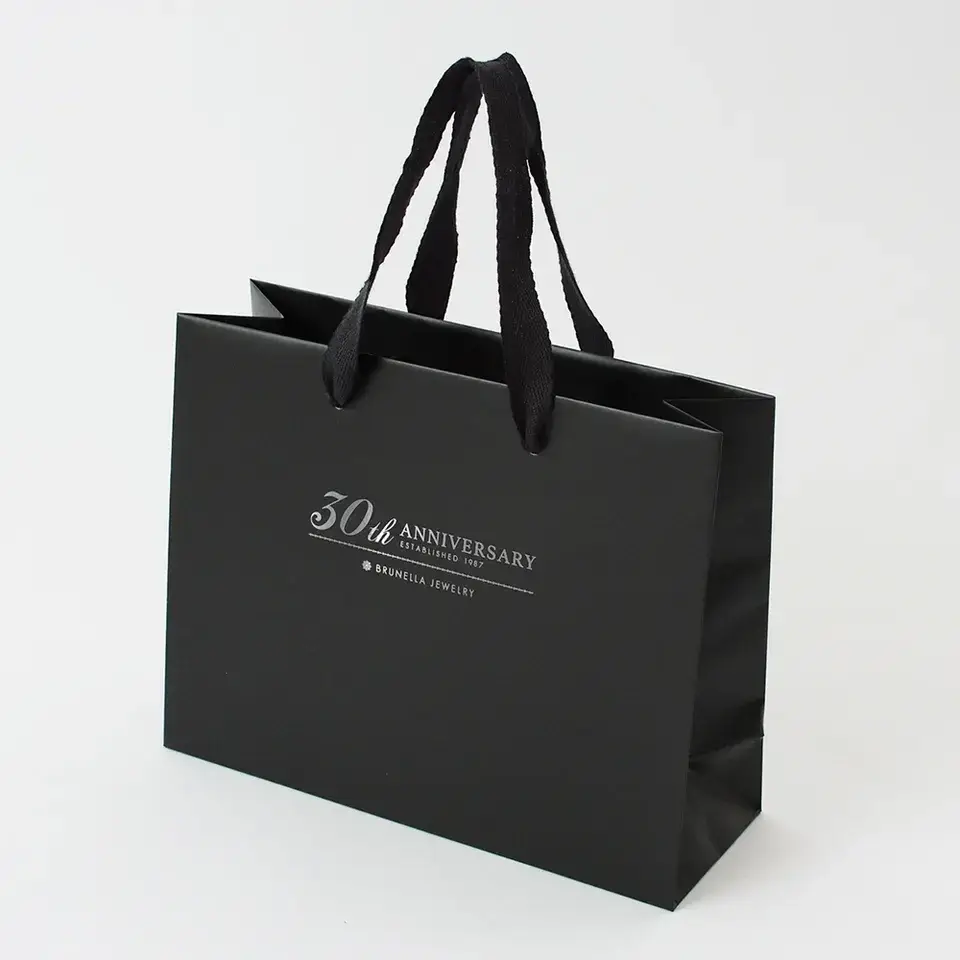
A luxury paper shopping bag is judged in about two seconds, in a shop doorway, with one hand. Almost none of that judgement is about the logo. It is about whether the bag holds its shape, whether the handle feels like it will survive the walk home, and whether the colour is the same colour it was on the shelf. This page covers the four decisions that actually control those impressions: paper, colour, handle and finish.
What separates a luxury bag from a branded bag
Three things, in this order. Stiffness, because a bag that folds at the top edge looks cheap no matter what is printed on it. Handle attachment, because a handle that tears on the first use ends the relationship. And colour consistency, because a brand colour that shifts between the box and the bag reads as a production error even when both are technically within tolerance.
Paper: the decision that sets everything else
| Paper | Weight | Hand | Strengths | Watch out for |
|---|---|---|---|---|
| Art paper (C2S) | 157 gsm | Light, folds sharp | Low cost, good print | Needs lamination for stiffness; creases can crack |
| Art paper (C2S) | 210 gsm | The workhorse for luxury retail | Holds shape, takes foil and emboss well | Above 250 gsm the crease needs scoring control |
| Art paper (C2S) | 250 gsm | Heavy, substantial | Best for large formats and gift-with-purchase | Higher crease-cracking risk at the top fold |
| Ivory board | 230 to 250 gsm | Stiff, warm white | Premium feel, good for beauty and jewellery | Surface is absorbent; colour can sink |
| Kraft | 150 to 200 gsm | Natural, slightly rough | Recycled story, lower cost | Limited print fidelity, colour shifts on brown |
| Black card | 250 to 300 gsm | Dense, matte | Strong shelf presence in dark palettes | Needs opaque white or foil; scuffs show at edges |
The choice is not about which paper is best. A 157 gsm bag with a good lamination looks more expensive than a 250 gsm bag with a bad crease, because crease quality is what the hand reads as quality. If the budget has to move, move it from weight to lamination and handling.
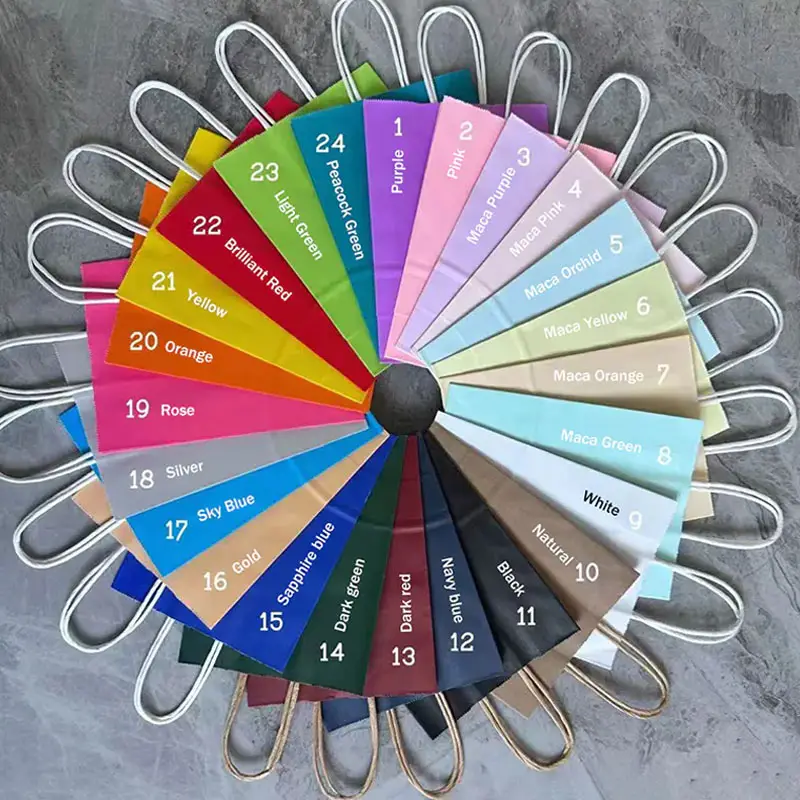
Colour: how solid-colour bags are actually specified
A solid-colour bag is either a dyed or coated sheet, or a full-bleed ink laydown on white paper. The second is far more common and behaves very differently from a printed panel.
- Full coverage magnifies press faults. Roller marks, ghosting and density variation that nobody notices in a logo become visible across a 300 mm panel. Ask for a drawdown or a press sheet, not a digital proof.
- Crease cracking is a colour problem more than a paper problem. Deep ink films break at the fold. A matte lamination carries the film across the crease; an uncoated dark sheet will show a white line within a few uses.
- Edge scuffing shows on dark colours. Matte lamination hides it; gloss exposes it. Black and navy are the two colours where this decides the finish.
- Three colours repeat in our sample room across years and markets: black, ivory and navy. They are safe because they do not date, and because they hold a foil stamp without competing with it.
Handles: the part that fails first
| Handle | Typical size | Feel | Load | Notes |
|---|---|---|---|---|
| Twisted paper | 3 to 4 mm | Light, matches bag | Moderate | Cheapest; colour-matched to the sheet |
| Flat paper rope | 10 to 15 mm wide | Softer on the hand | Moderate to good | Can be printed; wider contact spreads load |
| Cotton rope | 5 to 8 mm | Premium, tactile | Good | Knotted inside; knot must clear the reinforcement card |
| Grosgrain ribbon | 15 to 25 mm | Soft, tied | Lowest | Best for gift bags, not for heavy retail |
| Die-cut with PP patch | Shape varies | Integrated, clean | Low to moderate | Patch stops the hole tearing; cheapest to assemble |
Handle load is a structural number, not an aesthetic one. The specification chart pairs each handle type with the paper weight it can carry safely; the handle guide covers attachment methods in detail.
Finishes that read as expensive, and finishes that fight
Hot foil, blind emboss, spot UV and soft-touch lamination are the four that do the work. The rule that matters is one dominant finish. Foil on a soft-touch matte surface is a strong combination because the two contrast; foil plus spot UV plus emboss on the same panel reads as noise and often as cheaper than any one of them alone.
Two production notes. Foil must be stamped before lamination, never after: the adhesive on the film can oxidise the aluminium and the stamp loses density at the edges. And blind emboss needs a paper heavy enough to hold the relief – below 200 gsm the emboss flattens in transit.
Structure details nobody sees until they fail
- Reinforcement card inside the top fold, glued behind the handle holes. Without it, a 5 kg load pulls through the paper in one trip.
- Base board insert, so the bottom does not sag when the bag is set down loaded.
- Side gusset glue line wide enough to survive a full load; a 10 mm line is normal, 6 mm is a false economy.
- Top edge folded and glued rather than left raw, which is the single clearest visual difference between a premium bag and a promotional one.
The second life of the bag
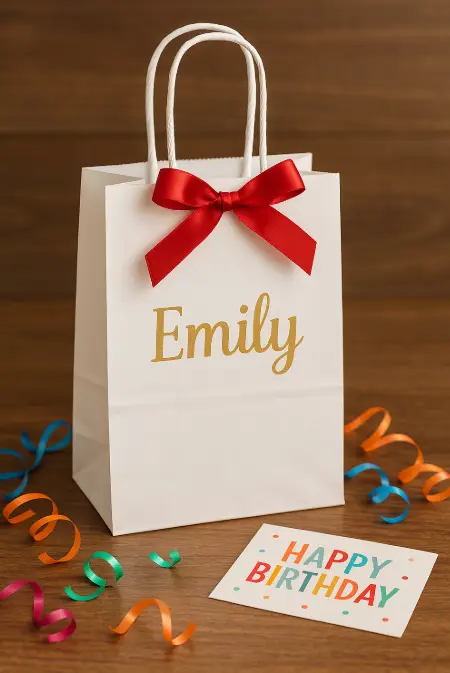
A bag that survives the journey gets reused, and reuse is the part of packaging that keeps working after the purchase. It reappears in a lift, on a street, in an office – carrying your mark into places no advertisement buys. That outcome is decided by weight and handle attachment, not by graphics. A 210 gsm bag with a reinforced cotton handle is reused; a 157 gsm bag with a glued paper handle is thrown away at the door.
Cost drivers and order quantities
Price moves on five things: paper weight, print coverage and colour count, finish, handle type and quantity. The one buyers get wrong is quantity, because bag production is dominated by make-ready. Doubling a small order often cuts the unit price by a third; halving a large one rarely saves what the buyer expects. If the design is settled and volume is uncertain, ask for a price break table at three quantities rather than a single figure.
Frequently asked questions
What paper weight is right for a luxury shopping bag?
210 gsm coated art paper is the default for retail. Move to 250 gsm for large formats or when the bag must stand unsupported, and down to 157 gsm only with lamination, for lightweight gift bags.
Can a solid colour bag be printed rather than dyed?
Yes, and it is the norm. A full-bleed ink laydown on white paper gives better colour control than a dyed sheet, at the cost of a higher cracking risk at the creases – which is why matte lamination is usually specified with it.
How many colours can be printed on a paper bag?
Offset handles four process colours plus one or two spots comfortably; digital handles four without spots. In practice most luxury bags run one or two colours plus foil, which is also the cheapest way to look expensive.
For the wider picture – paper, printing, finishing, handles and quantities in the order they affect cost – start with the complete buyer’s guide, or see the five bag formats compared for structure.